
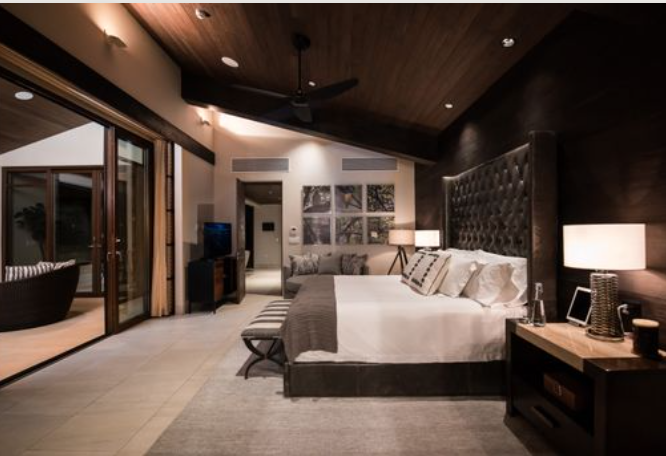

There was a time when a luxury wellness offering meant a treatment list: facials, massages, a menu of add-ons priced by the hour. That model isn’t disappearing, but for a growing number of travelers, it’s no longer the point. The most sought-after form of wellness in 2026 isn’t a service you book. It’s a condition you’re finally allowed to be in: undisturbed, unscheduled, and quiet enough to actually rest.
Nekupe was never designed around a spa menu. It was designed around stillness itself.
 The Shift Beneath the Trend
Generic spa escapes are increasingly seen as insufficient on their own: travelers are looking for something more specific and more fundamental: better sleep, real mental restoration, the kind of quiet that doesn’t come from a treatment room but from an entire environment built to support it. Wellness, in other words, is moving from an amenity to an architecture.
That’s a harder thing for most properties to offer, because it can’t be added after the fact. You can build a spa onto an existing resort. You can’t retrofit quiet onto a property that was never designed for it.
 What Stillness Actually Requires
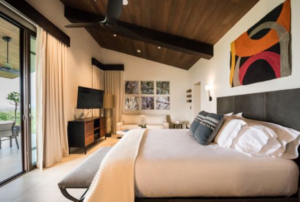
At Nekupe, restfulness isn’t scheduled into the day, it’s built into the structure of the place itself. Only eight rooms across 2,400 acres means there is no crowd to escape from, no adjacent conversation carrying across a shared pool deck, no itinerary competing for attention. Infrastructure was run underground specifically so nothing, no visible utility line, no mechanical hum, would interrupt the sense of undisturbed land.
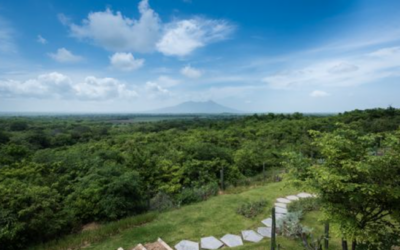
This is what “sleep-first” design actually looks like in practice: not a weighted blanket and a sleep menu, but an environment with nothing left in it to keep you awake. No traffic. No crowd noise. No light pollution competing with the volcano on the horizon.
Rest Without a Program
Restorative travel increasingly means experiences that feel restful without being prescriptive, nothing mandatory, nothing performative, no wellness itinerary handed to guests on arrival. At Nekupe, a morning might mean a slow walk along the reserve’s trails, or it might mean staying in a hammock until well past breakfast. Both are equally the point.
This is a deliberate departure from the wellness-resort model, where rest is often just another activity on the schedule: a 2pm sound bath sandwiched between a hike and dinner reservations. Here, the absence of a required program is itself the offering. Guests aren’t handed a checklist of things to do to relax. They’re given the conditions that make relaxing possible without needing to be told how.
 Why This Is Harder Than It Sounds
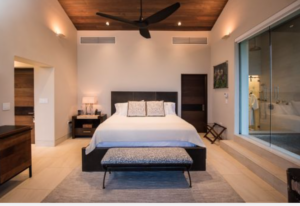
Genuine stillness is difficult to manufacture, which is precisely why so few properties can offer it convincingly. It requires low density by design, not by seasonal availability. It requires a location genuinely removed from noise, not merely styled to look remote. And it requires restraint from the people building the property, the discipline to leave things undeveloped rather than filling every acre with amenities.
Nekupe’s eight rooms and 2,400 acres of restored forest weren’t a wellness strategy. They were a land-use decision made a decade ago, for reasons that had nothing to do with a spa concept. But the result happens to be exactly what today’s most discerning travelers are looking for: a place where rest isn’t something you schedule, but something the environment simply allows.
The Real Luxury
A spa treatment can be booked anywhere. What can’t be booked is silence at this scale, privacy this complete, or a landscape restored specifically so it could hold that kind of quiet. That’s the actual luxury on offer here, not a menu of services, but the rarer thing underneath all of them: the space to finally stop performing rest, and just have it.
0 Comments