
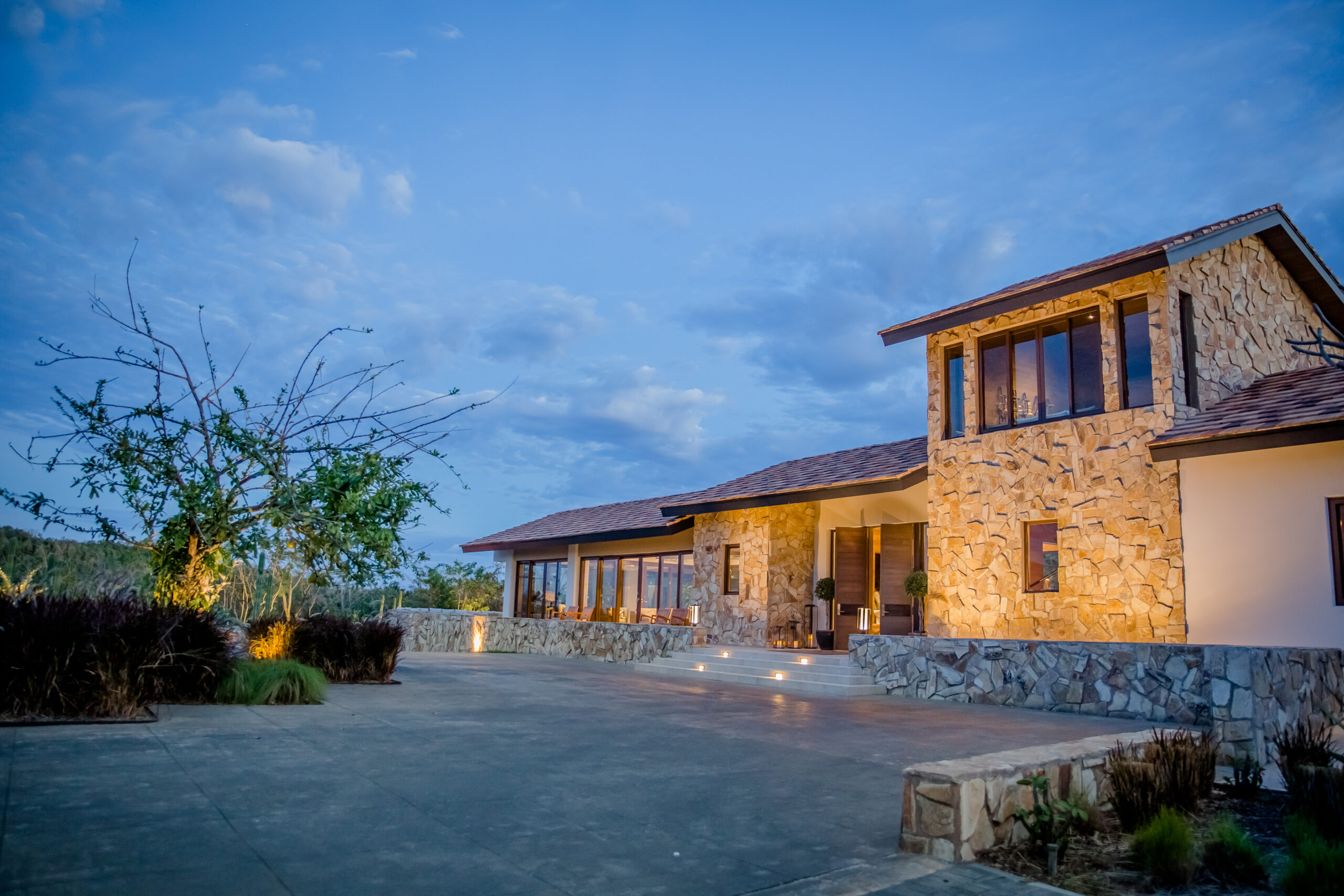

Most luxury properties start with a drawing.
A floor plan goes up first. A site is chosen to fit it. The land adapts to the architecture.
At Nekupe, it happened the other way around.
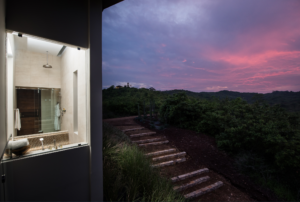
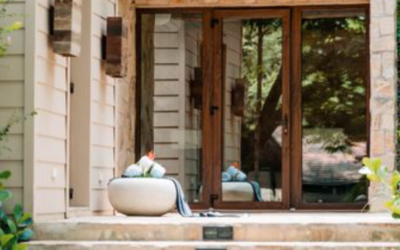
View from Nekupe’s Junior Nangu Bungalow.
Before a single line was drawn for what would become Nekupe, the architect packed a bag and moved onto the land. For a week, he slept under the same sky the guests would eventually sleep under. He woke with the light, walked the terrain through the heat of the day, and sat still long enough to notice the things that never show up on a survey — where the breeze settled in the late afternoon, where the morning sun landed first, where the land seemed to be asking for something to be built, and where it clearly wasn’t.
Only then did the drawings begin.
Built into the land, not onto it
What emerged from that week is more than 8,500 square meters of construction spread across Nekupe’s 2,400 acres — and very little of it visible from any distance. Roads, utilities, and infrastructure run underground, so that nothing competes with the view, the quiet, or the sense that this land has looked this way for a very long time.
Every structure at Nekupe was placed in response to something the architect had already noticed during that week. A room angled toward a particular sunrise. A path that curves around a tree instead of through it. A deck positioned exactly where the afternoon breeze arrives first.
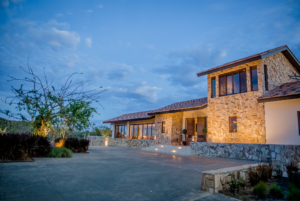
Nekupe’s Casa Club.
Designed for stillness
Throughout the property, the principles of Feng Shui guide more than placement — they shape how each space feels once you’re standing inside it. The way light moves through a room over the course of a day. The balance between open and enclosed. The sense of calm that settles over a space without an obvious explanation for why.
This wasn’t an aesthetic layered on once construction was underway. It was the same question the architect had been asking from his first night on the land: what does this place need, so that someone standing here can finally be still?
A final thought
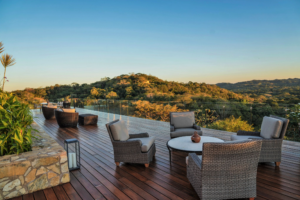
Uninterrupted views, Nekupe.
There’s a difference between architecture that announces itself and architecture that disappears — that makes a place feel less designed, not more. At Nekupe, that difference came from a simple decision, made before anything else: live there first.
The result is a property that doesn’t sit on the land. It belongs to it.
Nekupe is a 2,400-acre private reserve in Nicaragua’s Pacific countryside, approximately two hours from Managua. It accommodates a small number of guests at a time, by design.

0 Comments