

The Story of the Oropendola Nests at Nekupe
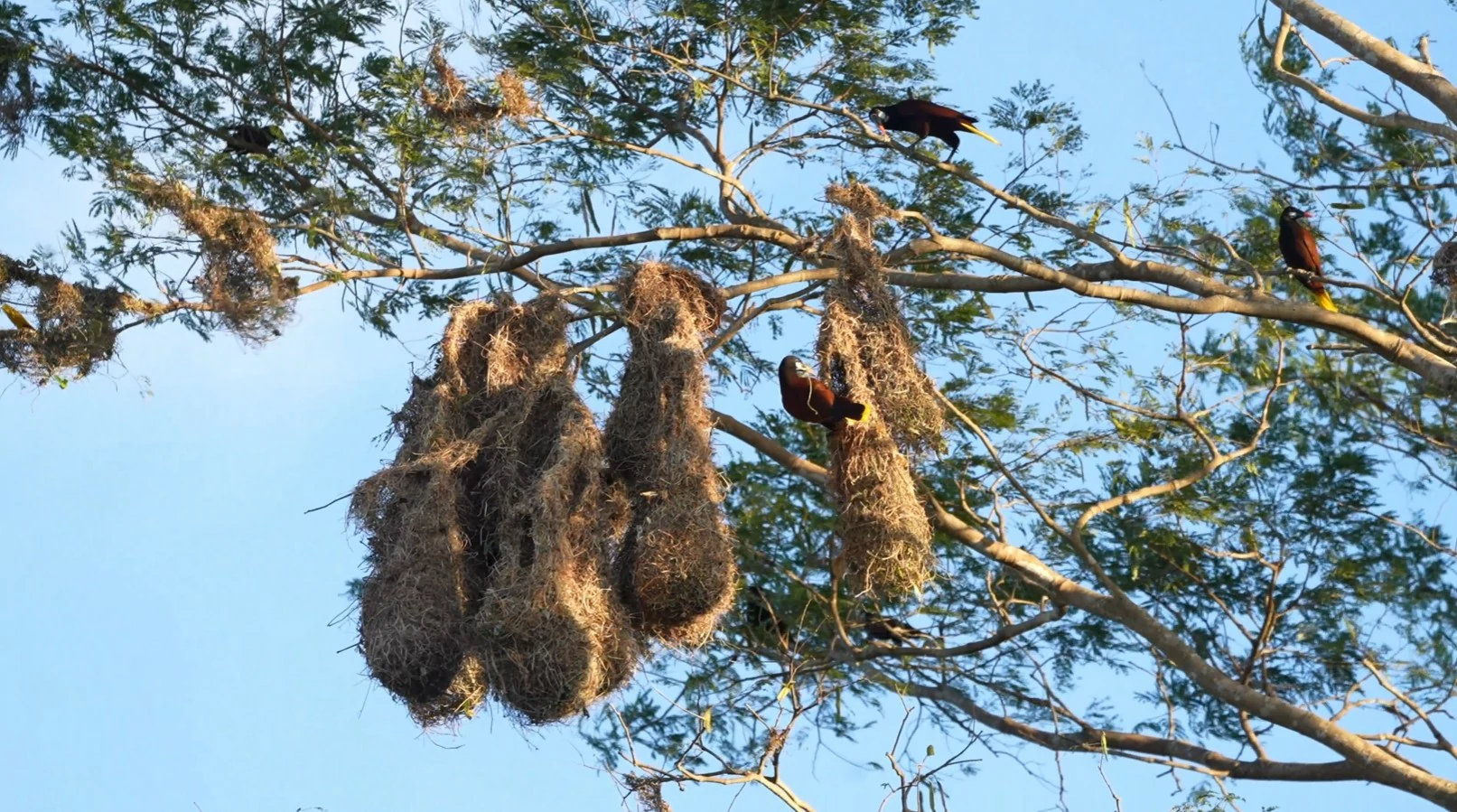
At Nekupe, where the winds sing through the trees and the sunlight filters through the branches, ancient colonies shine with golden flashes in the canopy of a majestic Guanacaste tree. These flashes are neither leaves nor flowers—they are the nests of the oropendolas, one of nature’s most astonishing creations.
Each season, the females take on the task of building the nests. They carefully select the strongest and highest branches, a decision that is far from random: from up high, they can better protect their chicks from snakes, monkeys, and other forest predators. With tireless patience, they weave plant fibers, dry leaves, and blades of grass, creating large, hanging nests that look like woven baskets suspended in mid-air.
Day by day, the nest takes shape. The oropendola spends hours intertwining materials with her beak, adjusting each strand as if she knew exactly where it belonged. When finished, the nest can measure over half a meter long and sway gently in the wind without breaking, proof of its remarkable strength.
While the females work, the males keep watch nearby. With dark plumage and bright yellow tails, they emit loud and peculiar songs to defend the colony and ward off intruders. Their calls fill the air, announcing that this tree has an owner.
Once the nests are ready, they become a true home. Inside, the chicks hatch, fully protected from the weather and predators. Thus, amid songs, wind, and high branches, the oropendola nests tell a story of cooperation, ingenuity, and adaptation, reminding us that nature can create true wonders.
Every visitor to Nekupe looks up at the canopy of the Guanacaste tree to admire these hanging nests—where birds do not just live, but where a story of work, community, and hope is woven, strand by strand, by the oropendolas of our forest.
Have you ever seen these nests up close? On your next visit to Nekupe, don’t forget to look up at the sky.

0 Comments